Inventory and pricing powered by AI
built for pharmaceutical wholesalers
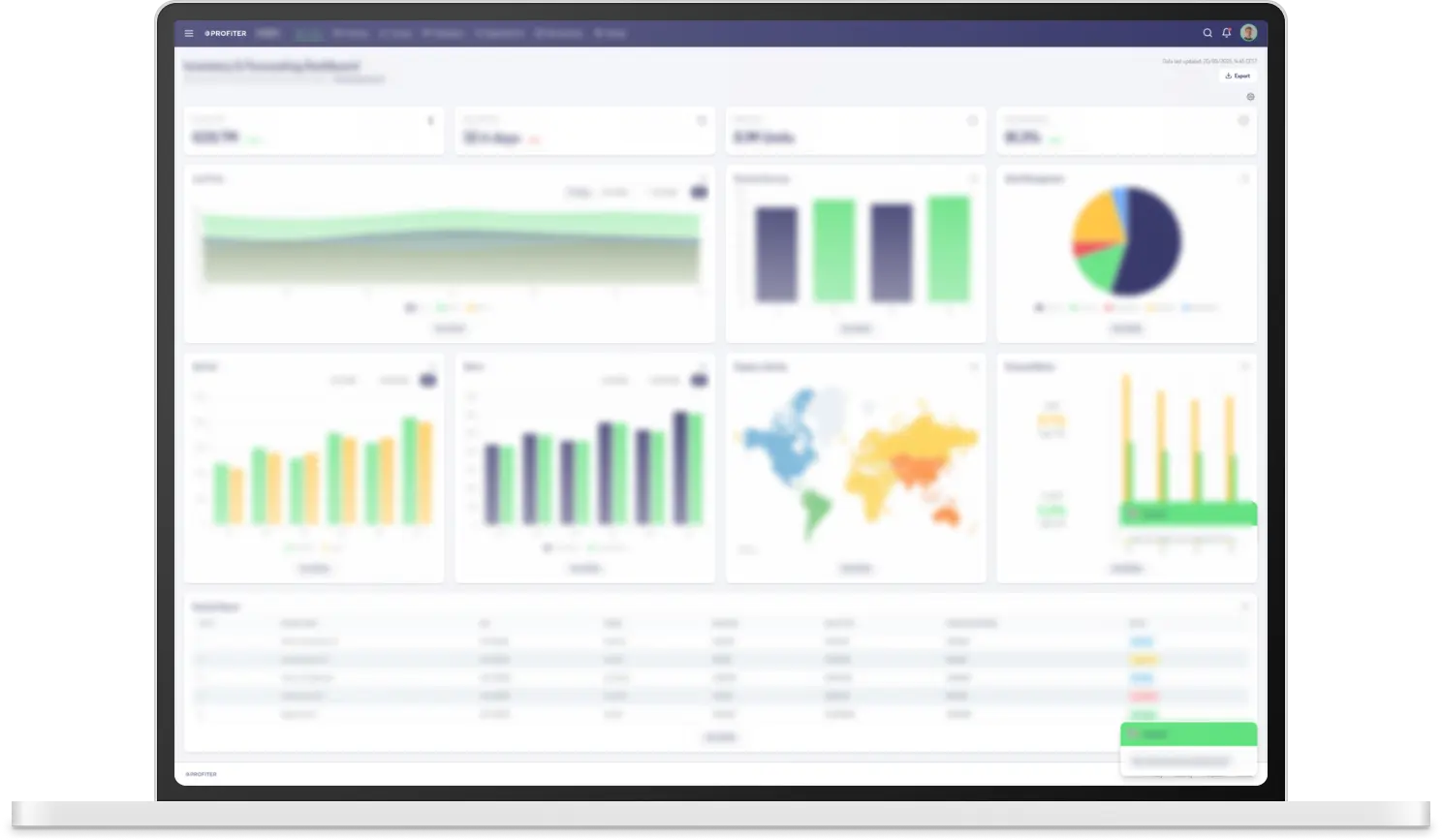
CURIO is Profiter’s vertical AI platform designed to support pharmaceutical wholesalers in inventory management and dynamic pricing.
It optimises replenishment processes, gain tighter control over inventory, and enable dynamic pricing management based on demand, competitive context, market variables, and industry constraints.
A native AI for pharmaceutical complexity







From forecast to real availability
Managing stock means making the right decisions on what to order, how much, and when.
CURIO covers the full inventory management cycle, from coverage planning to dynamic replenishment, working at SKU level in a Just-In-Time framework.
Each decision is driven by real demand, supplier lead time, variability, and product lifecycle, turning forecasts into concrete operational actions.





Problems it solves
Shortages and lost revenue
Stockouts on high-demand products drive customers and revenue to competitors.
Higher service levels and sales continuity.
Across Europe, this challenge is three times harder to manage than it was ten years ago, requiring significant time and operational effort to resolve.
Overstock and tied-up capital
Excess inventory, slow movers, and end-of-life products generate cost and write-offs.
Less capital immobilized, fewer forced discounts.
Static and reactive decisions
“Gut-driven” replenishment and one-size-fits-all rules across very different SKUs limit competitiveness.
Data-driven decisions that are consistent, traceable, and scalable.
Dynamic Pricing
The right price, for every pharmacy. Every day.
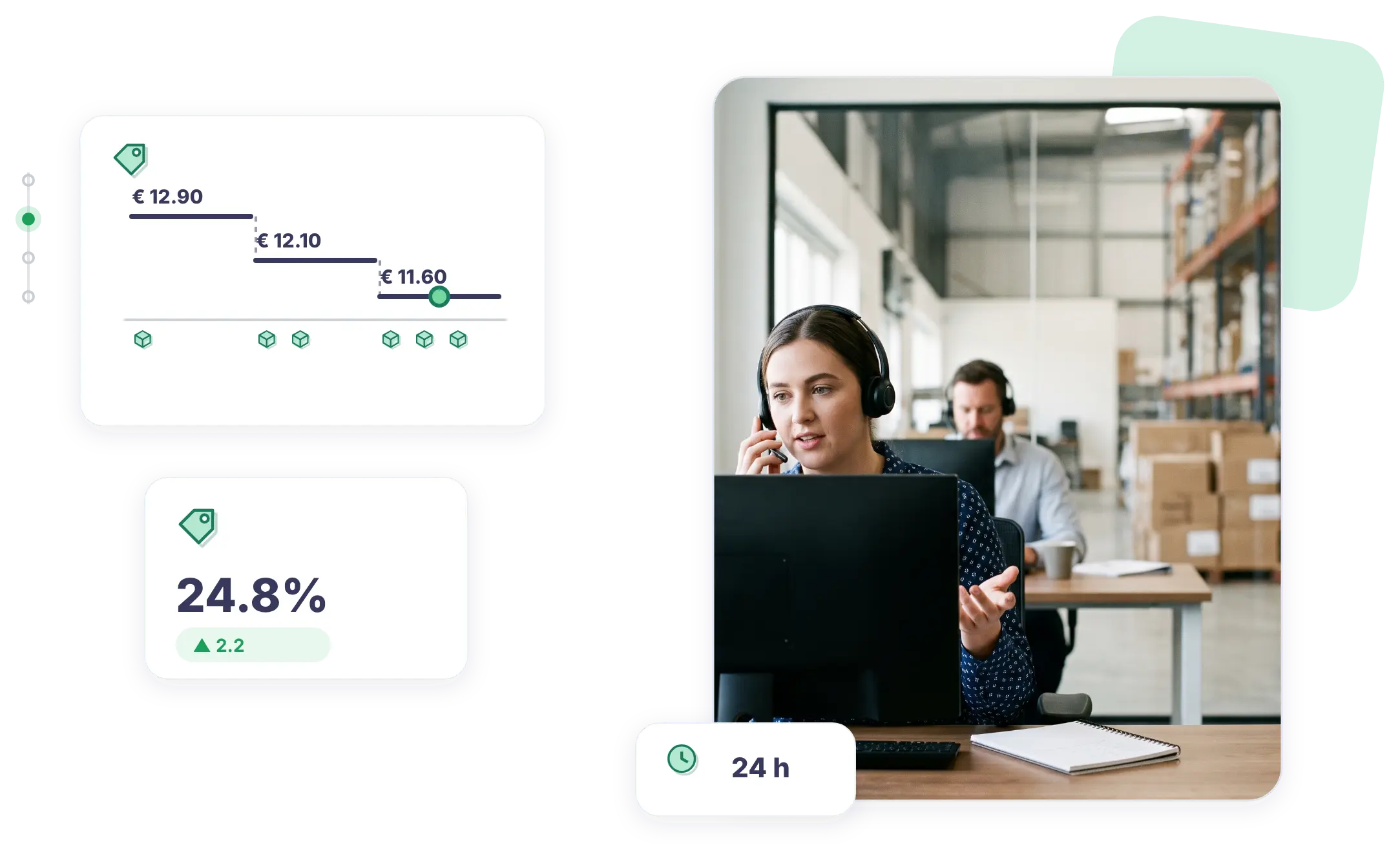
In pharmaceuticals, pricing has traditionally meant fixed price lists.Dynamic pricing goes further—replacing static prices with personalized, data-driven pricing.
CURIO enables wholesalers to define different prices for each pharmacy, on every SKU, based on real commercial conditions and market context.As in travel or hospitality, price becomes a strategic lever that adapts to demand, not a fixed rule.


Personalized pricing
Each pharmacy is treated as a unique customer: sales volume, historical relationship, group membership, loyalty, and targets all feed into price calculation.

Prices that follow the market
Pricing reflects expected demand (30, 60, 90 days), availability, and structured competitor comparison.

Beyond static price lists
No more managing thousands of manual price lists. Prices are generated from data, not rigid rules.

Fully compliant by design
CURIO dynamic pricing operates in full compliance with pharmaceutical regulations, especially for ethical products.
Key capability areas

Dynamic Selling
Sales prices adapt to demand, stock levels, and shortage or overstock risk.

Dynamic Purchase
Offer normalisation, real cost management, supplier risk assessment, and purchasing decision support.

Structured competitive comparison
Competitor price analysis by SKU and category, without triggering destructive price wars.
Problems it solves

Untapped margin opportunities
Prices remain unchanged despite favorable demand conditions.
Unlock hidden margin potential.
Stop the race to the bottom on price
“One-cent-less” competition erodes profitability.
Competitive yet sustainable pricing.

Operational complexity
Manual price list management does not scale.
Customer-level pricing without operational burden.

Uncontrolled pricing decisions
Reactive, fragmented decisions reduce transparency.
Coherent, traceable, strategy-aligned pricing.
CURIO is already used as a reference platform for pharmaceutical dynamic pricing projects, including organizations such as QFARMA.
Vertical. Modular. Ready to scale.
We are pioneers of vertical AI, with real-world experience since 2016 and measurable results, not promises. Combine modules and amplify results.

The technology powering a smarter supply chain
CURIO is built on Profiter AI, our proprietary vertical AI engine, which harmonises all enterprise data through its central hub, CURIO Core.

Connectors
Multiple connectors
REST APIs, ERP/WMS/SCM integrations
Multi-layer data fusion
External data sources (regulatory, market, logistics, weather, promotions, competitors)
Forecasting
Intelligent normalisation
Sell-in/sell-out reconciliation, anomaly detection
Native demand & sales forecasting
Converts real demand into expected sales
Interaction
Multi-role dashboards
HQ and branches with role-based access
Optional Generative AI layer (optional)
Natural language interaction and proactive insights
Curio Features
Inventory
01 · DATA, FORECASTS AND MODELS
Data Model IT
Your data, finally consistent
A normalised relational database integrating sales, stock, master data and price lists; reconciles sell-in/sell-out and detects anomalies.
Features
Normalised relational data model integrating sales, stock, master data, branches, price lists and lead times.
Automatic reconciliation of sell-in and sell-out to eliminate local distortions.
Detection and correction of anomalies (outliers, data blackouts, inconsistent behaviors).
Management of hierarchical and “family” relationships between SKUs, as required in the pharmaceutical domain.
BENEFITS +
Clean, structured and consistent data, ready for forecasting engines, optimisation algorithms and ERP/WMS integrations.
Forecast Horizons
Accurate forecasts, every day
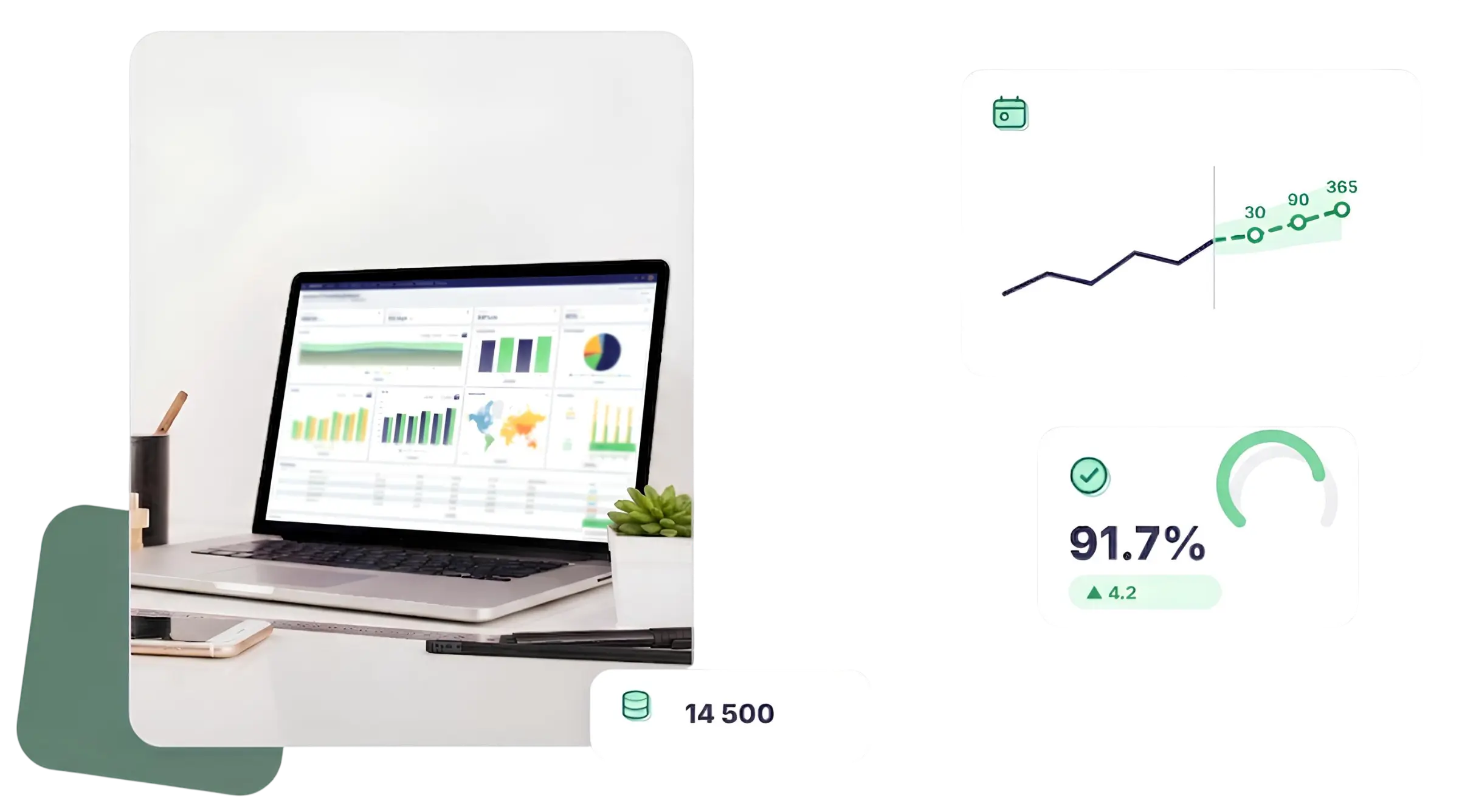
Multi-horizon forecasting (30–365 days) with confidence metrics (MAE, MAPE, variance), based on exogenous correlations and cyclicality.
Features
Multi-horizon forecasts: short, medium and long term (30–365 days).
Forecasts at single-SKU and single-branch level.
Automatic integration of external signals (e.g. weather, cyclicality, promotions, seasonal dynamics) via correlations and autocorrelations.
Reliability indicators (MAE, MAPE, variance, confidence intervals).
Vertical pharmaceutical model recognising substitutes, equivalents and related products.
BENEFITS +
One single forecast for the entire company, continuously updated and consistent across the whole supply chain.
Custom Model
The predictive twin of your business
AI model trained on your company data, continuously updated through user feedback and market events.
Features
Predictive model trained on proprietary data and historical dynamics.
Continuous updates via new operational inputs and changes in real demand.
Inclusion of exogenous factors and recurring patterns.
Decoupling of real demand from observed sales to properly handle stockouts and operational constraints.
No dependency on external services: proprietary engine running in private cloud.
BENEFITS +
Robust, context-aware forecasts that adapt to change without manual intervention.
Dashboard
Total control, in real time
UX dashboards with KPIs, tables, charts and role-based views (HQ, branches, buyers).
Features
Role-based dashboards for headquarters, buyers, planners and branches.
KPIs for demand, stock, turnover, coverage and forecast performance.
Historical charts, trends, dispersion analysis and forecast version comparisons.
Navigation by SKU, category, branch and related product families.
BENEFITS +
Immediate visibility on stock status, critical issues and opportunities, without manual reporting.

02 · STOCK, OPTIMISATION AND KPIS
Safety Stock
Intelligent safety stock
Automatic calculation of safety stock and coverage based on demand and lead time.
Features
Dynamic safety stock calculation based on demand variability, lead time variability and target service level.
Automatic updates whenever demand or supplier performance changes.
Uncertainty evaluation via forecast confidence intervals.
BENEFITS +
Higher service levels and reduced stockout risk, with inventory always aligned to real demand patterns.
Optimisation
The right quantities, at the right time
Dynamic order quantity optimisation with constraints (MOQ, capacity, target stock).
Features
Optimal order quantity calculation based on coverage, MOQ, capacity, priorities and service targets.
Automatically generated order proposals from forecast data.
Management of supplier constraints and HQ operational preferences.
BENEFITS +
More accurate orders, less overstock, better shelf availability.
Operational KPIs
The metrics that really matter
KPIs on turnover, coverage, sell-out velocity and stockout rate.
Features
Analysis of turnover, coverage, stockout rate and real sell-out velocity.
KPIs integrated with forecast data to highlight deviations between expected and observed demand.
Automatic identification of critical or anomalous SKUs.
BENEFITS +
More reliable planning and targeted corrective actions.
Reporting
Full transparency, zero ambiguity
Historical reports, forecast versions and dispersion analysis.
Features
Historical reporting with forecast versioning.
Monthly dispersion analysis, deviations, variances and distortion drivers.
Standard report sets for HQ and branches, plus BI exports.
BENEFITS +
Complete transparency on forecast performance and the drivers behind deviations.
What-If
Simulate. Evaluate. Decide.
Simulations for promotions, lead time changes and external events.
Features
Simulations covering promotions, demand spikes, lead time changes, assortment updates, substitutions and product discontinuations.
Impact analysis on availability and coverage.
Comparison of alternative scenarios.
BENEFITS +
Stronger decisions and more resilient plans.
ABC/XYZ
Scientific priorities, not intuition
SKU classification using the Tangent Method with differentiated policies.
Features
ABC/XYZ classification using the Tangent Method.
SKU-level priority identification.
Automatic association of stock policies by cluster (replenishment, safety, rotation).
BENEFITS +
Differentiated policies to maximise availability and reduce capital lock-up.

03 · HQ AND BRANCH GOVERNANCE
Branch Orders
Every branch orders at the right time
Automatic order proposals (quantity, timing, risk).
Features
Automatic recommendations for each branch: quantity, urgency, risk and optimal coverage.
Management of branch clusters with highly variable local demand.
Monitoring branch performance versus forecast.
BENEFITS +
Drastic reduction of overstock and understock in peripheral units.
HQ Supervision
The full picture, always up to date
HQ supervises and approves branch orders.
Features
HQ approval or blocking of branch order proposals.
Centralised governance rules on assortments, priorities and stock targets.
Elimination of operational discrepancies.
BENEFITS +
Total control without sacrificing local flexibility.
HQ Integration
From local data to central decisions
Data flows to HQ for centralised visibility.
Features
Structured data flows to HQ for real-time centralised visibility.
Full consistency between local and global data.
Elimination of manual or offline updates.
BENEFITS +
Immediate alignment between central planning and distributed operations.
Inventory HQ
One control room for all inventory
Unified HQ inventory management.
Features
Centralised management of HQ (central warehouse) inventory.
Single view of availability, requirements, turnover and coverage.
Replaces other inventory systems while maintaining ATP integrations where needed.
BENEFITS +
Lean processes and zero inconsistencies between HQ and branches.
04 · LIFECYCLE, ESG AND INTEGRATIONS
Lifecycle
Always consistent, even when the catalogue changes
Phase-in/phase-out and product family management.
Features
Advanced lifecycle management: new / active / slow / phase-out.
Parent-child relationships between discontinued products and substitutes (critical in pharma).
Consistent forecast updates throughout transitions.
BENEFITS +
Forecast continuity during assortment changes, with no data gaps.
Slow / Dead Stock
Recover value from your inventory
Slow-moving and dead stock management with recommendations.
Features
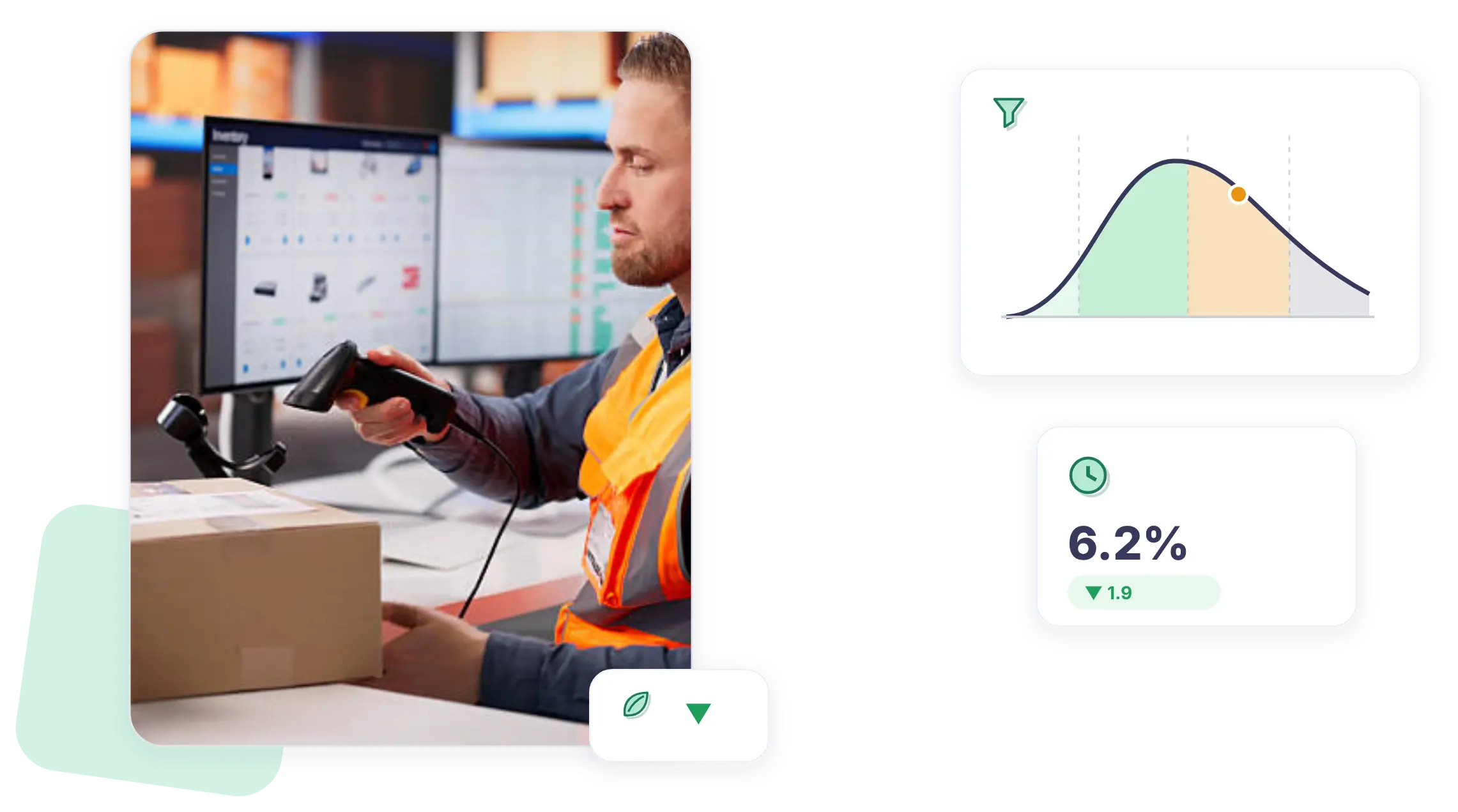
Identification of slow-moving and dead stock.
Operational recommendations for recovery, reallocation, substitution or reduction.
Integration with real demand forecasts to define priorities.
BENEFITS +
Reduced inventory lock-up and waste.
Alerts & To-Do
Focus only on what matters
Alerts, to-do lists and role-based views.
Features
Alert and to-do system by role (buyers, planners, branches).
Automatic highlighting of anomalies, critical stock, demand changes and forecast errors.
Filters and priorities to focus attention.
BENEFITS +
Immediate responsiveness and reduced decision overload.
API & BI Gateway
A platform that speaks your systems
APIs for read/write integration with ERP/WMS/SCM and BI.
Features
REST APIs for read/write integration with ERP, WMS, SCM and BI tools.
Multiple connectors for existing enterprise systems.
No duplication: direct integration with current systems.
BENEFITS +
Information consistency and more automated processes.
ESG Inventory
Inventory that respects the environment
Sustainability KPIs (obsolescence, service level, waste).
Features
ESG KPIs on availability, obsolescence and product destruction.
Calculation of environmental impact of inventory.
Support for EU regulatory compliance.
BENEFITS +
Reduced waste and improved sustainability performance.
Monthly Releases
A platform that grows with you
New features every month, driven by user feedback.
Features
Continuous release of new functionalities based on real user feedback.
Updates aligned with buyers’ and planners’ operational needs.
No disruption to operational systems.
BENEFITS +
A constantly evolving platform, always aligned with changing processes.
Training
Autonomous teams in just a few days
Training programs and continuous support.
Features
Fast onboarding for HQ and branches.
Training on KPIs, forecasting, optimisation and processes.
Ongoing support to maximise adoption.
BENEFITS +
Autonomous operational teams, fast ramp-up and reduced human error.
Optional Add-On (Inventory)
GenAI Inventory
The AI that answers and anticipates
Private natural-language chat with proactive insights and instant answers.
Private internal chat trained on company data.
Instant answers on KPIs, stock, forecasts and anomaly drivers.
Proactive suggestions based on system trends.
ADVANTAGES+
Ultra-fast analysis and shorter decision cycles.
Budget HQ
Annual budgeting built on real data
Generation of annual forecast P&L starting from AI-driven inventory planning.
Transformation of AI inventory forecasts into financial projections for annual budgeting.
Budget simulations and demand-impact analysis.
Continuous alignment between operational and financial planning.
Adaptation to existing financial planning models.
ADVANTAGES+
Budgets fully aligned with commercial planning, based on consistent, shared data across departments.
Curio Features
Dynamic Pricing
01 · CUSTOM AND DYNAMIC PRICING
Dynamic Pricing Basic
From price list to personalized pricing
Transform standard price lists into dynamic, customer-specific prices.
Features
Automatic generation of personalized prices from base price lists.
Pricing logic applied at SKU and customer level.
Conversion of multi-price lists into tailored dynamic prices, considering discount classes, canvases and membership levels.
Integration with existing ERP systems.
BENEFITS +
More precise pricing, optimised margins and flexible price lists without manual effort.
Customer Personalization
Every customer is unique
Prices based on history, master data, membership status and sales objectives.
Features
Detailed customer profile analysis.
Segmentation and pricing at category and SKU level.
Differentiated rules by category, objectives and commercial conditions.
BENEFITS +
Stronger loyalty, optimised margins and personalized pricing strategies.
Market Dynamic Pricing
Adapt to the market, in real time
Prices update based on expected demand at 30–60–90 days.
Features
Predictive demand analysis.
Price updates by category and SKU based on forecasts.
What-if simulations for alternative scenarios.
BENEFITS +
Unlock hidden profit opportunities, reduce underpricing and improve market competitiveness.

02 · COSTS, OFFERS AND COMPETITORS
Cost Management
Total cost control
Base price definition considering real costs, lot sizes and operational constraints.
Features
Unit and lot cost calculation.
Aggregation of internal and variable costs.
Management of regulatory and ethical product constraints.
BENEFITS +
Safer margins, reduced error risk and reliable pricing decisions.
Canvas Normalisation
Clear offers, no confusion
Standardises complex offer templates, avoiding confusion and speculative purchasing.
Features
Standardisation of offer canvases.
Analysis of multiple constraints and special conditions.
Integration with purchasing logic and forecasts.
BENEFITS +
Fast, transparent comparisons and error-free strategic purchasing.
Competitor Benchmarking
Don’t chase the market. Anticipate it
Monitor competitor prices by category, SKU and geography, with pricing actions suggested.
Features
Data collection from multiple external sources.
Multi-stream competitor price analysis.
Actionable insights to adjust prices relative to the market.
BENEFITS +
Optimised margins, controlled opportunistic pricing and competitiveness without automatic price cuts.
Competitor Price Comparison
Instantly see where you’re losing margin
Collects, compares and interprets competitor prices and selling logic.
Features
Automated competitor price collection from pharmacy systems and networks.
SKU-level price analysis using Minsan, AIC and EAN codes.
Identification of critical price gaps and inefficiencies.
Priority lists of products to review or realign.
Recognition of “Best Price” logics and margin impact.
BENEFITS +
Greater competitive control, recovered margin and targeted interventions.

03 · BEST PRICE AND FORECASTING
Best Price Management
The best price, always
Integrates management systems to identify optimal prices based on market and stock.
Features
Automatic identification of the best price for single items or bundles.
Automatic updates in ERP/CRM systems.
Scalable, modular pricing logic.
BENEFITS +
Optimal prices, protected margins and fast, consistent decisions.
Price forecasting AI
Predict real demand, not just sales
Distinguishes real demand from observed sales, correcting shortages, substitutions and seasonality.
Features
Demand analysis based on clean, normalised, anomaly-free time series.
Integration of external data to detect shortages beyond company boundaries and automatic correction of stockouts and substitution rebounds.
Forecasting using time-series models (ARIMA, SARIMA, Prophet, LSTM).
Forecast accuracy metrics (MAE, RMSE, WMAPE).
Guardrails limiting the impact of exogenous variables on prices (±1–2%).
BENEFITS +
More stable demand forecasts, supporting planning, purchasing and inventory optimisation.
Optional Add-On (Pricing)
GenAI Pricing
The AI that optimises your prices. Private chat with automatic insights for immediate pricing decisions.
Natural-language chat trained on sales, cost and market data.
Instant answers on optimal prices, margins and profit opportunities.
Proactive suggestions based on demand trends, competitors and customer history.
ADVANTAGES+
Ultra-fast analysis and reduced decision latency.

Want to see CURIO in action?
With CURIO, pricing and inventory become strategic levers, not operational problems to chase.