demand-driven inventory and dynamic pricing for plans that hold
For pharmaceutical manufacturers, planning is a financial decision. Every committed order, every production batch, every price set to a channel directly moves working capital, production efficiency, and commercial margins.
Long lead-time procurement, batch-constrained manufacturing, and GMP compliance make one thing clear: generic tools are not enough. Pharma planning needs Vertical AI that knows your supply chain inside out. Horizontal planning platforms weren’t designed for pharma’s complexity. Profiter AI was.
Key challenges for pharmaceutical manufacturers
Pharma supply chains have never faced more pressure: fragile sourcing, volatile demand, rising costs, tariffs and service-level expectations that leave no room for error.
Three structural challenges define planning in this environment:





Long planning horizons
Raw materials, excipients, and APIs come from global supply chains, often concentrated in distant markets.
Early commitment means purchase decisions locked in 9–12 months before demand materialises — before channel mix is confirmed, competitive dynamics are clear, or promotional calendars are set. The supply chain must commit while the market is still moving.
Planning decisions must therefore balance:
working capital absorption
risk of overstock
risk of stockouts on critical SKUs
maximisation of service continuity and availability

WHAT IS ONE POINT OF FORECAST ACCURACY WORTH?
of average DIO
Manufacturers typically hold capital in inventory (raw materials, intermediates, and finished goods) for an average Days Inventory Outstanding of around 200 days. In this context, even a small improvement in forecast accuracy can generate significant financial impact on working capital and operating costs.

Forecasts that fail to capture real complexity
Standard forecasting models analyse historical trends and seasonality well,
but break down the moment external variables enter the picture:
new product launches
promotions or pricing changes
market shortages
competitive actions and other relevant external factors start influencing demand.
Without integrating these signals, traditional models absorb planning capacity while delivering outputs that require manual correction before any decision can be made.
In pharma, where GMP (Good Manufacturing Practices) compliance, batch management, and end-to-end traceability are non-negotiable, a planning platform must encode these constraints natively — not work around them.
Fragmented information and lack of end-to-end visibility
R&D, planning, production, quality, procurement, and logistics operate across separate systems with misaligned KPIs and no shared source of truth.
Up to
of demand planners’ time

Up to 40% of demand planners' time is spent on repetitive activities, including manual reconciliation of data coming from multiple sources.
Reducing these repetitive tasks through structured integration of data sources allows teams to reallocate time to higher-impact strategic activities.
The consequences are significant:
01
fragmented visibility on demand and production capacity
02
approved production plans that turn out to be unfeasible. forecasts misaligned with manufacturing constraints, orders based on outdated information
03
non-transferable know-how concentrated in a few experts
The result: decision silos, non-scalable processes, and planning teams under constant pressure.
Inventory & Pricing Engineering for Pharma:
where the real difference is made
More robust planning requires forecasting models capable of:

incorporating pharma-specific variables and constraints
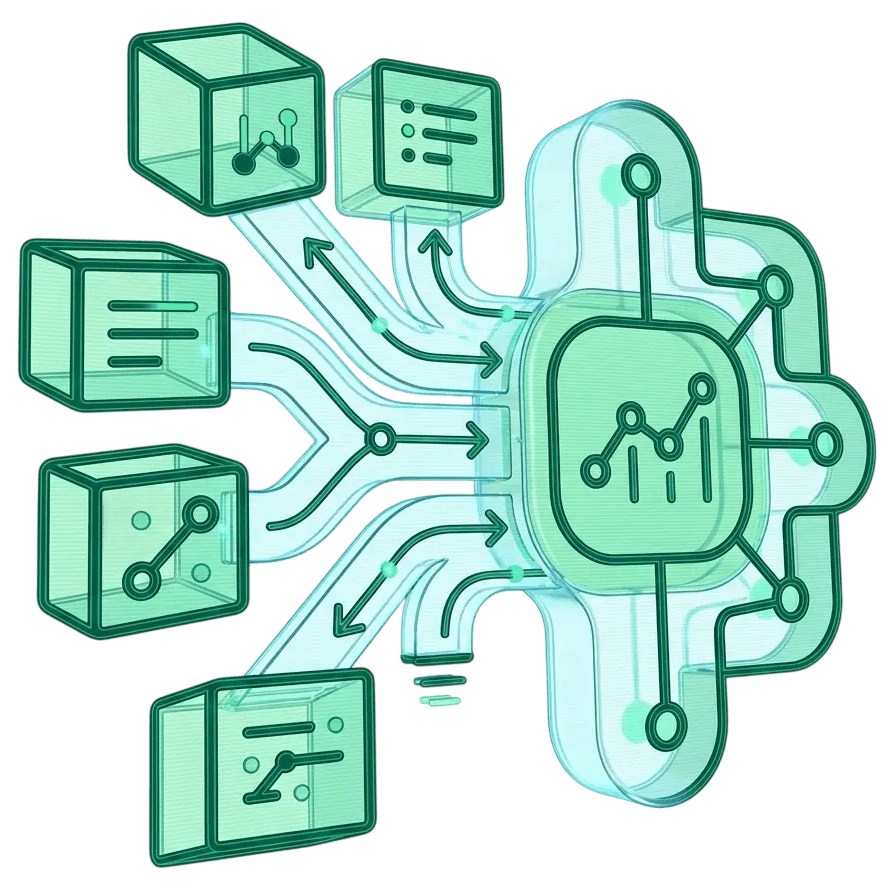
integrating information from fragmented systems

delivering higher forecast accuracy to support long-term strategic decisions, not just reactive corrections
For this reason, Profiter built CURIO — an AI-native planning platform designed exclusively for pharma:


built exclusively for the pharmaceutical sector
trained across all nodes of the supply chain
integrable with existing systems (ERP, data lakes) without replacing them

CURIO optimises against the KPIs your management team already tracks:
TCF
Total Cost Function (TCF) optimisation
EOQ / MOQ
dynamic Economic Order Quantity (EOQ) modelling and Minimum Order Quantity (MOQ) management
DoS / Turnover
Days of Supply and Inventory Turnover monitoring
MAPE / WAPE
accurate forecast accuracy measurement (MAPE / WAPE)
OTIF
service-level indicators such as OTIF
Cost Functions
integrated cost functions across the supply chain

With CURIO, the role of planners evolves:
AI generates more reliable forecasts and scenarios, highlights anomalies, and enables teams to focus on exceptions and high-impact decisions. Teams that make this shift see:
cost savings
improved service levels
increased margins

From operational forecasting to financial planning
Better forecasting does more than improve operations. In pharma, it reshapes the financial plan.
In pharma, more reliable forecasts generate economic benefits across the entire supply chain: lower industrial costs, better use of production capacity, reduced working capital absorption, and the automatic generation of forward-looking budgets.
CURIO extends predictive, engineering-driven planning to financial and economic planning, transforming operational forecasts into dynamic, measurable budgets.
Budgeting is no longer a downstream exercise built on static assumptions. It originates from demand forecasts, industrial costs, and pricing policies — keeping operations, finance, and commercial aligned on the same numbers.
Translating AI forecasts into projected P&L scenarios
Simulating financial impact before decisions (price, volume, mix)
Reducing variance between budget and actuals
Improving reliability of industrial and financial plans



Toward a stronger and more profitable supply chain.
Improving demand planning means reducing industrial costs, optimising capital management, and turning budgeting into a forward-looking management tool — not just an accounting exercise.
CURIO extends the predictive and engineered approach of inventory management and pricing to financial planning, translating operational forecasts into budgets that are coherent, adaptive, and measurable.
Would you like to see how predictive AI and inventory & pricing engineering can enhance the financial planning of your pharmaceutical supply chain?